Many Ottawa residents remember that in the second half of the 20th century, one of the city’s oldest and most magnificent cinemas was located on Queen Street. Its history may not be as long as other Ottawa cinemas, but it was certainly eventful. Throughout the 20th century, it showcased not only films but also hosted various events. More on ottawa-trend.com.
Opening of the Cinema
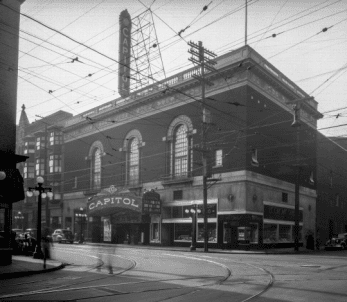
One of Ottawa’s oldest cinemas on Queen Street opened in the fall of 1920. For Canada’s capital, the cinema’s opening was a significant event. It was named the “Capitol Theatre,” and its grand opening attracted dozens of early 20th-century movie stars. The number of film and theatre celebrities in Ottawa was unprecedented. Such a large gathering of stars had never been seen in Canada before.
For the theatre’s opening, they arrived in Ottawa on a special train from New York City. At the city’s main railway station, Union Station, the stars were greeted by a crowd of fans and an orchestra. The esteemed guests were then transported to the Capitol Theatre in limousines, followed by guards, mounted police, and soldiers carrying British, French, and American flags.
The new Ottawa cinema opened its doors to visitors on November 8 at 1:00 p.m. In 1920, ticket prices at the Capitol Theatre were as follows:
Daytime:
- Balcony seating – 15 cents
- Loge seating – 35 cents
- Box seating – 35 cents
Evening:
- Most seats were priced at 55 cents. Taxes were included in the ticket price.
First Film
For an entire week following the cinema’s opening, it screened the film The Love Flower, directed by Griffith in 1920. The film starred George MacQuarrie, Richard Barthelmess, and Carol Dempster. It was a thrilling detective story about a mysterious murder of a woman’s lover, with the perpetrator fleeing to the South Pacific and being pursued by a relentless detective.
Unique Features of the Capitol Theatre
The Capitol Theatre was truly special. It became a highlight of Ottawa’s cultural life. Tickets for the cinema were purchased directly before the film, with no reservation system. Films were shown continuously throughout the day, alternating with vaudeville performances.
Although the theatre was originally built for film screenings and vaudeville acts, it soon became a major centre for theatrical and musical performances in Ottawa. The Capitol Theatre’s stage frequently hosted renowned 20th-century performers, singers, and musicians. Some of the great artists who performed there included Glenn Gould, Nelson Eddy, and many others. The venue also hosted some of the most successful operas and orchestras from Canada, the United States, and other countries.
Architecture of the Theatre and Its Owner
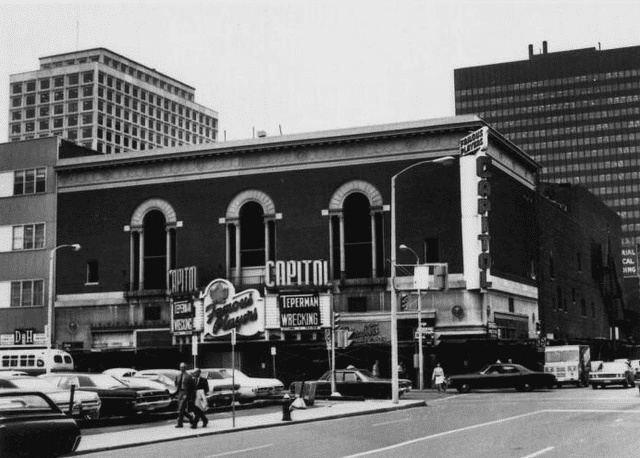
The Capitol Theatre was built in 1920 as part of the high-end Loew’s Theatre chain. The owner of this chain was Marcus Loew, a highly experienced figure in the film industry. He began his career operating cheap arcade machines and nickelodeons.
The architect responsible for the theatre’s design was Thomas Lamb, one of the most successful and sought-after designers of the early 20th century. His architectural projects spanned numerous prestigious buildings in the United States, and he also designed a cinema building in Toronto.
The foundation of the Capitol Theatre was laid in 1919. Constructing the grand theatre building cost approximately $1 million at the time. The concert hall alone cost an impressive $400,000.
The building was a true architectural gem of Ottawa, designed in the neoclassical Adam style. It featured three large Palladian windows above the main entrance and marquee, overlooking Bank Street. The theatre’s main doors were massive, crafted from oak. Visitors entering the theatre first stepped into a spacious vestibule adorned with towering columns and high mirrors. The lighting in the vestibule was provided by crystal wall sconces. The ticket booth was embellished with bronze and ivory details. The theatre’s foyer had a unique geometric ceiling design, illuminated by a massive central chandelier. A grand marble staircase led to the ballroom mezzanine level. On both sides of the staircase were entrances for the orchestra. Above the stairs, on the mezzanine level, there were separate rooms for writing, a ladies’ lounge, and a smoking room painted in “Pompeian green.” Luxurious leather armchairs and sofas complemented the theatre’s grand interior. The walls of the Capitol Theatre were decorated with tapestries, frescoes, and ornate niches. The floor was covered with an antique floral-patterned carpet. In the audience hall, an elaborately adorned proscenium arch framed the theatre’s main stage. For guests’ comfort, fresh air circulated continuously through large air ducts installed beneath the seats.
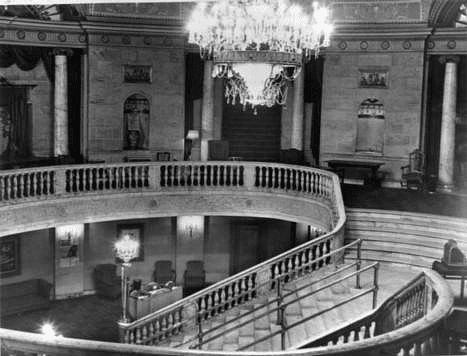
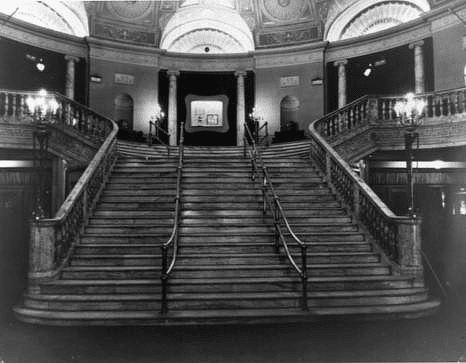
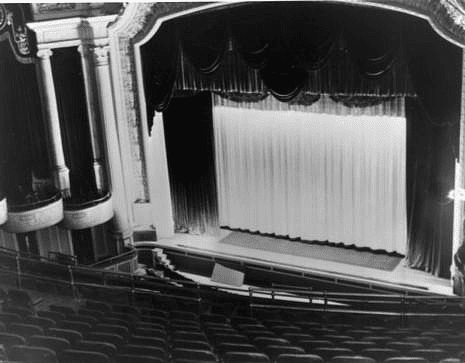
The Capitol Theatre was one of Ottawa’s largest cinemas, boasting 17 rows and seating for over 2,000 people.
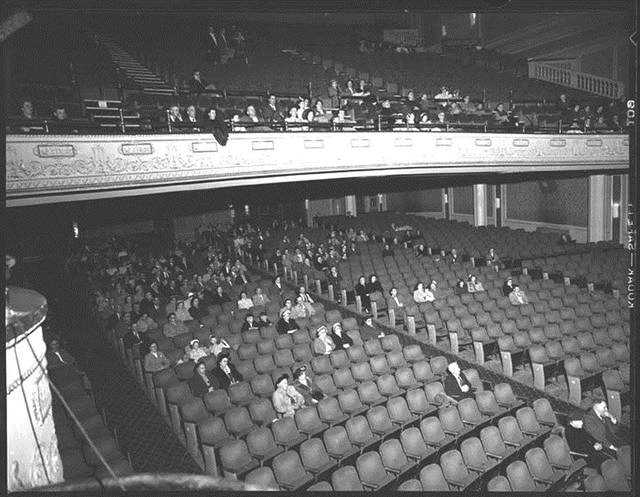
Decline, Closure, and Demolition
The Capitol Theatre thrived for many years until the early 1960s when serious challenges arose. In 1964, news broke that the theatre was to be split into two smaller cinemas. This was a response to the grand success of Ottawa’s Elgin Theatre, which featured two large screens. However, for various reasons, these plans never materialized, and the Capitol Theatre continued to operate in its original format.
Despite this, the cinema’s success was short-lived. By the late 1960s, the massive 2,000-seat hall was increasingly difficult to fill. The venue became unprofitable, both as a cinema and a theatre. The primary reason for this decline was the widespread adoption of home televisions and film-watching devices. Additionally, competing theatres with multiple smaller screens and significantly lower rental costs outpaced the Capitol Theatre.
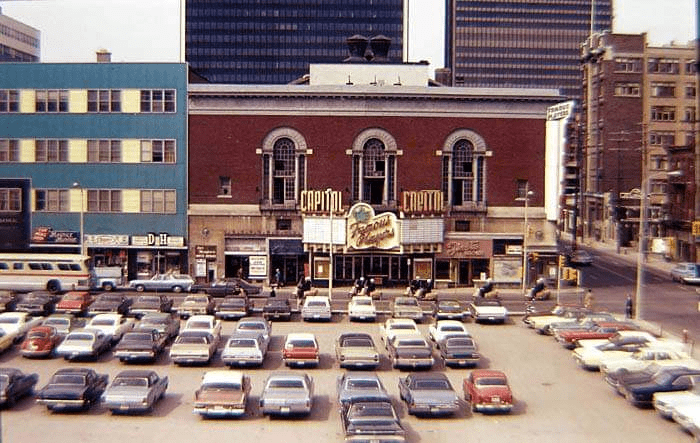
The final blow came in 1967 when the National Arts Centre opened, making the Capitol Theatre obsolete.
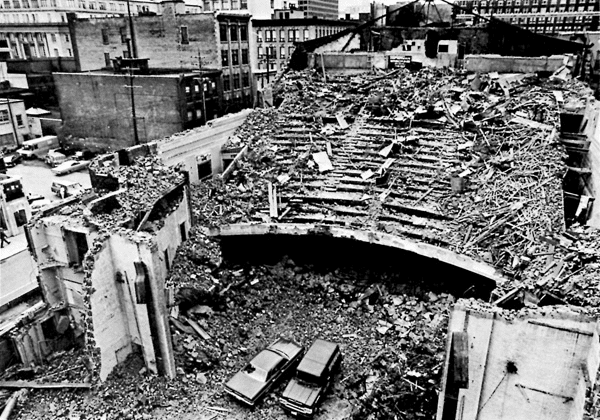
In 1970, the Capitol Theatre screened its last film, MASH*, a black comedy that won an Academy Award. The film depicted events in a field hospital during the Korean War, starring Donald Sutherland and Elliott Gould. Following the screening, this once-grand cinema was closed and demolished.
During the 1960s and 1970s, Ottawa residents could do little to prevent the destruction of this architectural masterpiece, as heritage preservation laws did not yet exist. As a result, the government unceremoniously demolished the Capitol Theatre, erasing one of the most exquisite architectural landmarks of Canada’s capital.