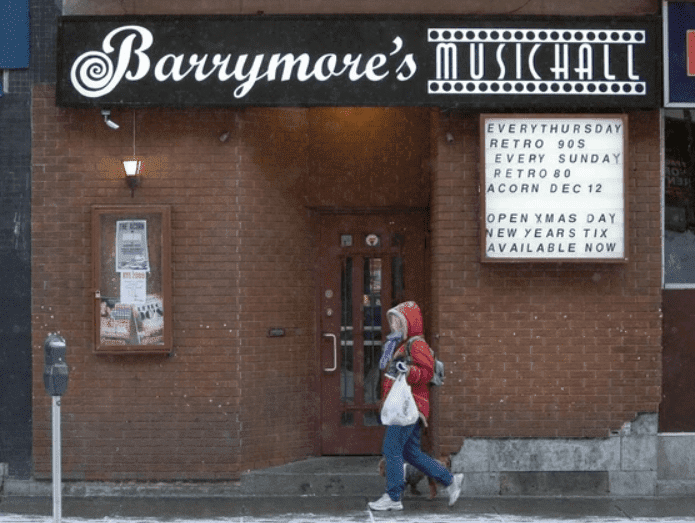
What was nightlife like in the past? Where did Ottawa’s residents and visitors go for entertainment? Ottawa Trend delves into the fascinating history of Barrymore’s, a venue that has seen many transformations over the years. What stories do its walls hold? What moments were witnessed and later forgotten? Join us on a journey through Ottawa’s entertainment history, starting from the early 20th century.
A Brief Overview: The Evolution of the Venue
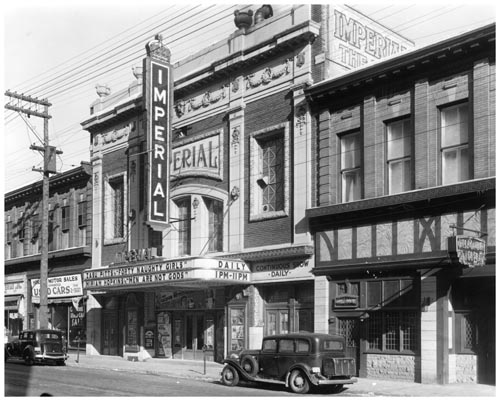
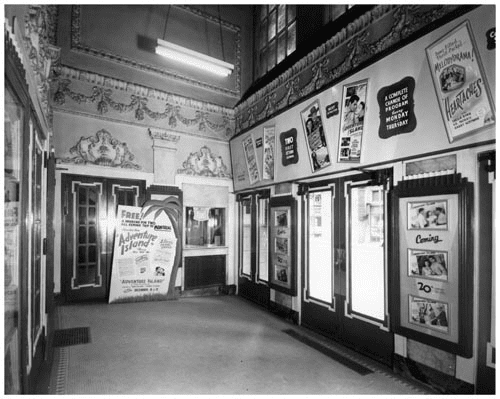
Only a shadow of Barrymore’s former glory remains today, but its history is as rich and dynamic as Bank Street itself. In 1914, the majestic Imperial Theatre opened, operating until 1955. Interestingly, one of its original frescoes still remains, serving as a historical reminder.
Over the decades, the building transformed several times:
- A storage facility
- A furniture store
- A nightclub
- A strip club
- Eventually, a legendary music hall, hosting stars and musical icons such as U2 and Tina Turner.
The Imperial Theatre: Ottawa’s Grand Venue
The Imperial Theatre opened its doors on August 24, 1914. It was widely recognized as one of Ottawa’s finest theatres and was known as “Canada’s Theatre Beautiful.” Located at 323 Bank Street, the venue could accommodate 1,091 guests, making it one of the city’s largest and most beloved cinemas.
The opening night was a spectacular event, featuring fanfare and searchlights illuminating the evening sky. The following day, the Ottawa Journal published a glowing review:
“The Imperial Theatre has a truly metropolitan look from every angle—both the interior and exterior exude remarkable elegance.”
At the time, it was regarded as one of the most luxurious cinemas in Canada. The upper level was reserved for Ottawa’s elite, offering a premium experience.
The theatre was developed by Harry Braus, a well-known entrepreneur who also built other cultural venues in the Ottawa-Gatineau region. He successfully filled his theatres with popular films, ensuring a steady flow of visitors.
However, just ten years after the Imperial Theatre opened, Harry Braus passed away at the young age of 53. The venue was later sold to Solomon and A.H. Coplan.
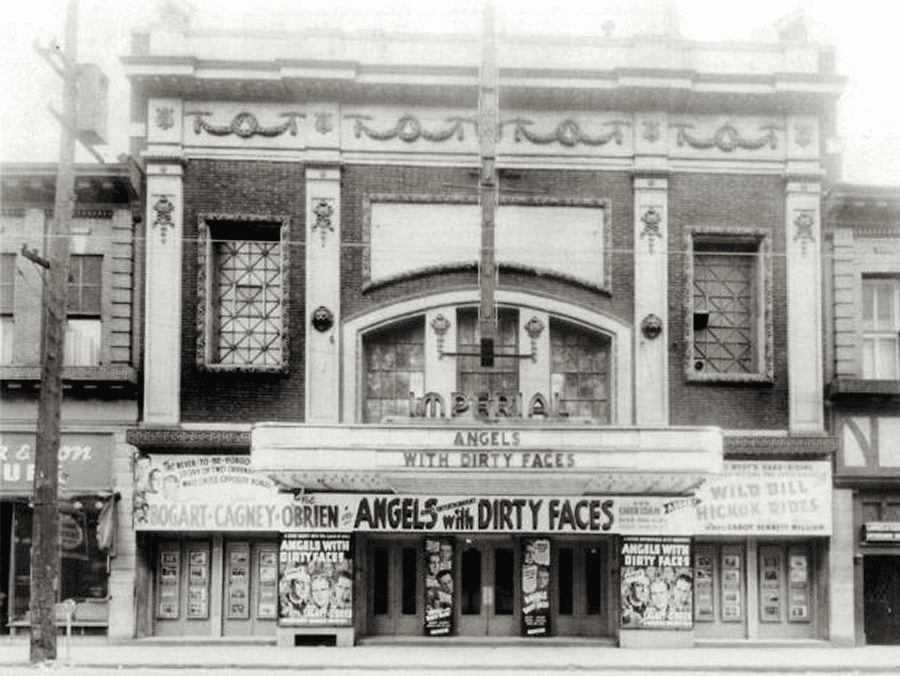
By the 1920s, the Imperial faced stiff competition from the newly opened Loew’s Theatre. As a result, its popularity declined. Over time, the main audience became children, who frequently visited for serialized movie screenings.
During the 1930s, the theatre hosted Sunday religious services for the Metropolitan Tabernacle. The congregation was awaiting the completion of its own church building—Metropolitan Bible Church.
Ironically, 40 years later, the Imperial Theatre would transform into a venue for a very different kind of performance—from Sunday worship to burlesque strip shows.
The Closure of the Imperial Theatre
Following World War II, television became the dominant form of entertainment, causing many theatres to struggle financially. One by one, Ottawa’s cinemas began shutting down—including the Imperial Theatre.
On October 15, 1955, the final screening took place, featuring the film “Johnny Dark”. That same evening, the doors were permanently closed, with a sign posted outside reading:
“Closed until further notice.”
The Imperial Theatre’s final transformation occurred in 1955 (or 1956, according to some sources). The building was horizontally divided, with retail shops occupying the lower level. However, the upper floor—which once housed the grand auditorium—remained largely intact.
A Furniture Store
For approximately 15 years, the former Imperial Theatre became a furniture warehouse and retail store.
The building was owned by Sam Rothman, who occasionally hosted private screenings upstairs.
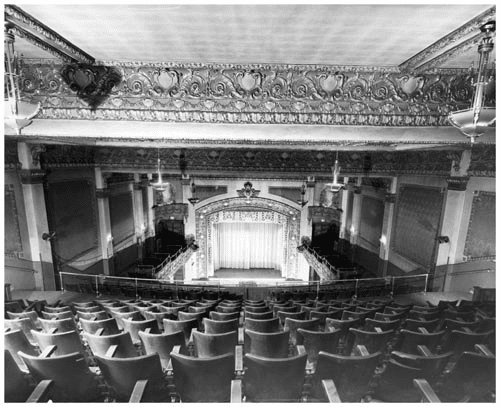
The Strip Club Era: Pandora’s Box
By the 1970s, the venue had undergone yet another transformation. It first operated as the Opera Discotheque, a hotspot for psychedelic rock and dance music.
Later, Dino Antonakos purchased the building, introducing Canada’s first “nude burlesque house”.
In 1971, the venue officially reopened as the strip club “Pandora’s Box.”
The audience changed dramatically. The once-elegant theatre became a hub for adult entertainment, featuring provocative performances and burlesque shows.
Pandora’s Box quickly gained popularity, overshadowing its main competitor, “Fanny’s Cabaret,” which eventually relocated to ByWard Market to attract a new clientele.
New York businessman Bob Verba praised Pandora’s Box as one of Canada’s best and largest live adult entertainment venues.
Michael Johnson and Margaret Aboud curated extravagant burlesque performances, blending European and Broadway influences to create a truly unique atmosphere.
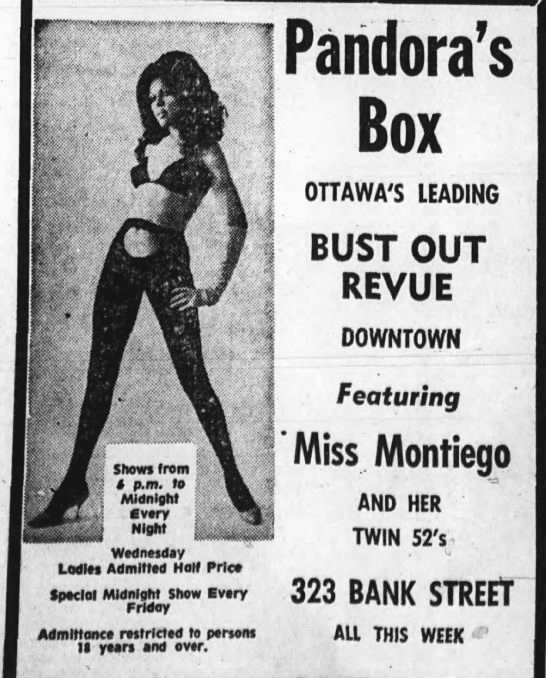
Ottawa’s Disco Era: A Popular Nightclub
By the late 1970s, Ottawa remained a fairly conservative city, and controversy over the strip club continued to grow. Sensing a shift in public sentiment, Bob Verba made a strategic move—he shut down Pandora’s Box in 1977.
In 1978, the venue reopened as a disco nightclub, under a new name—Barrymore’s.
The venue was named in honour of the famous Barrymore theatrical family, re-establishing a connection to the building’s past as a performance venue.
To enhance the club’s reputation, Verba invested heavily in its renovation, installing a custom-lit dance floor inspired by the movie “Saturday Night Fever”.
The disco scene thrived, but by 1979, the club closed again for another major transformation.
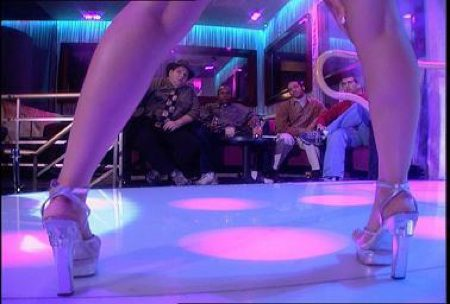
Barrymore’s Music Hall: A Legendary Live Music Venue
Barrymore’s became one of Canada’s premier live music venues.
The former balcony area was converted into a performance stage, creating a stunning multi-level concert experience with six levels and three floors. The venue could accommodate 400 people, offering an intimate yet energetic atmosphere for live performances.
Barrymore’s evolved into a dance club and live music venue, hosting thematic nights to attract a broader audience.
In 1991, the club declared bankruptcy but reopened five years later under the ownership of Eugene Haslam.
In 2008, Barrymore’s was purchased by George Siriannis and Vince Simeone. Eventually, Siriannis became the sole owner.
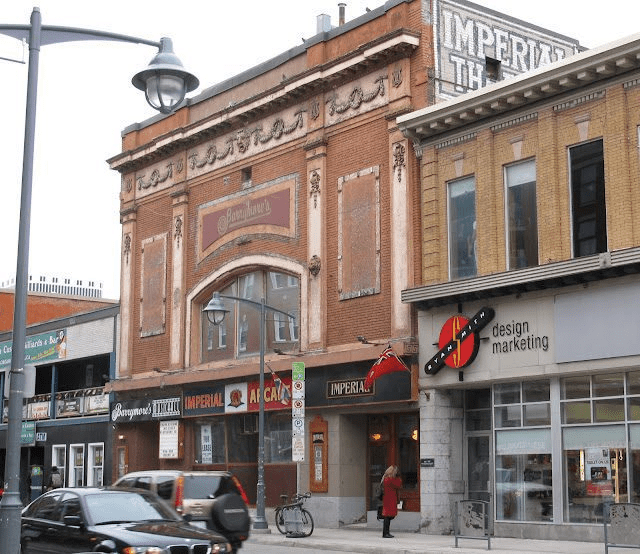
Barrymore’s Centennial Anniversary: 100 Years of History
In 2014, the historic building celebrated its 100th anniversary. Concerned citizens launched a petition advocating for the restoration of the building’s façade, ensuring that future generations could appreciate its architectural and cultural significance.
Through the years, Barrymore’s audience and reputation have evolved significantly.
Today, many people pass by this historic building, unaware of its long and colourful past—a story of entertainment, transformation, and resilience.