


Did you know that Canada’s National Arts Centre was established during the country’s centennial celebrations in 1967? The people of Ottawa felt immense pride and optimism, but the opening of the centre was delayed by two years. Ottawa Trend delves into the importance of this institution and its remarkable journey.
How It All Began
On June 2, 1969, the construction of the NAC marked the culmination of efforts by prominent figures in the arts community who united to establish Canada’s National Arts Centre. They were convinced that such a centre would play a crucial role for both the city and the nation.
A key figure in this initiative was G. Hamilton Southam, a former diplomat and Ottawa resident who became the centre’s first director. A leading patron of the project was Southam’s friend, Lester B. Pearson, Canada’s Prime Minister at the time. Pearson aimed to commemorate Canada’s 100th anniversary in a meaningful way and secure his place in history.
At the same time, local residents proposed the construction of a concert hall in Ottawa, which later evolved into a national arts organization. The NAC became a unique venue dedicated to showcasing and promoting music, theatre, opera, and dance in both official languages.
The Grand Opening
On May 31, 1969, the National Arts Centre held its grand opening, attracting over 40,000 people. The event was widely covered by both national and international media. Interestingly, there were no speeches during the opening evening—only a few powerful statements about the future and the centre’s significance for the city.
Three well-equipped performance halls became Canada’s premier venues for “high art,” including opera, ballet, and symphonic concerts. The centre hosted Canadian and international artists, as well as renowned performers.
- The Opera House, later renamed Southam Hall.
- The Theatre.
- A smaller experimental studio.
In 2000, a fourth venue was added to serve the local community. This space was converted from a former shop and a room used for lively social gatherings.
The Creation of the NAC Orchestra
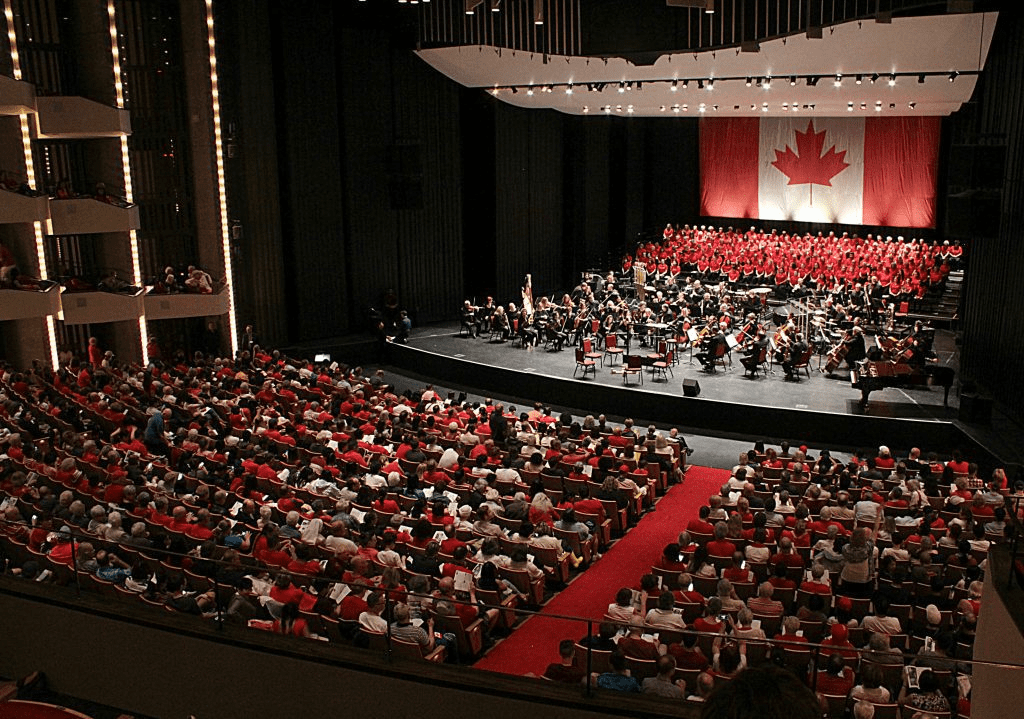
The National Arts Centre Orchestra was formed as a 45-member chamber ensemble designed for touring Canada, including its most remote regions. At the time, this concept and its execution were groundbreaking achievements. The NAC’s first music director was Jean-Marie Beaudet, who not only led the orchestra but also personally auditioned musicians from across Canada.
In the summer of 1969, the first gathering of musicians took place in Ottawa, with most of them being Canadian.
Local Theatre Scene
The NAC Theatre program combined in-house productions with performances by visiting theatre companies. The venue regularly hosted leading dance companies, enriching Ottawa’s cultural scene with a variety of classical, contemporary, Canadian, and international productions.
During Southam’s tenure, opera enjoyed immense popularity. Opera conductor Mario Bernardi presented new operatic productions during the NAC’s summer music festival, attracting the attention of fans, critics, and leading artists alike.
Overcoming Challenges
By 1977, difficult times arose due to inflation, which significantly impacted the national budget. The centre then experienced a period known as the “dark years” due to federal funding cuts.
Eventually, audiences returned, marking the beginning of a revival. Today, more than 50% of the NAC’s budget comes from non-government sources, including private fundraising through the National Arts Centre Foundation.
Canada’s National Arts Centre serves as a testament to the importance of “live” performances. Notably, in 2021, the NAC launched the series “Undisrupted”, further reinforcing its commitment to the arts.